Attention Structural Change During CLIP Fine-Tuning: A Comparative Study of Full Fine-Tuning, LoRA, and Regularization
A structural analysis of how CLIP attention changes under full fine-tuning, LoRA, and regularization.
A portfolio of research, engineering, and community work
This site investigates how artificial intelligence can be designed, governed, and taught in ways that protect human dignity, strengthen public trust, and expand social opportunity.
Inspired by the interdisciplinary spirit of technology, philosophy, and civic engagement, the project asks a simple but demanding question: How do we build intelligent systems without losing sight of the people they are meant to serve?
The answer lives in research, essays, real-world experience, and community-facing work. In other words: fewer black boxes, more human responsibility.
A structural analysis of how CLIP attention changes under full fine-tuning, LoRA, and regularization.
A systems paper on accelerating diffusion inference with fused low-bit kernels and cache-update fusion.
A single-GPU diffusion system for generating short sign-language videos from text prompts.
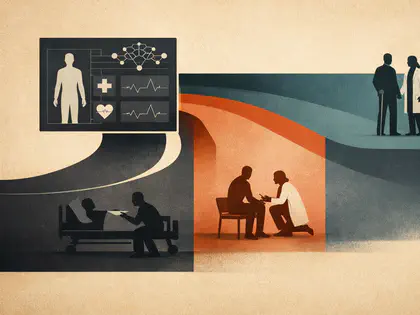
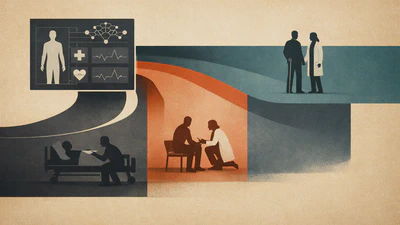
A closer look at how AI systems can formalize unequal treatment, with the health-care risk algorithm study as a concrete warning.
The labor issue is not only whether jobs disappear, but how AI changes bargaining power, task control, and whose work becomes more precarious.
AI is often described as pure software, but its growth depends on data centres, power systems, cooling, and public infrastructure.
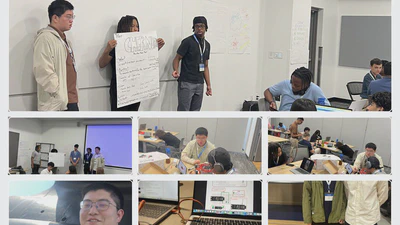
A residential engineering leadership program at Georgia Tech focused on design thinking, robotics, communication, and collaborative problem solving.
Gradient Descent Gradient Descent is an iterative algorithm used to optimize objective functions, widely applied in machine learning and deep learning to train models by minimizing …
Machine Learning Basics This article is based on Chapter 5 of Machine Learning Yearning and introduces some basic concepts and methods of machine learning. Supervised Learning This …
Deep Feedforward Neural Networks This article is a study note for Chapter 6 of the book Deep Learning. Introduction Deep Feedforward Networks, also known as Multilayer Perceptrons …
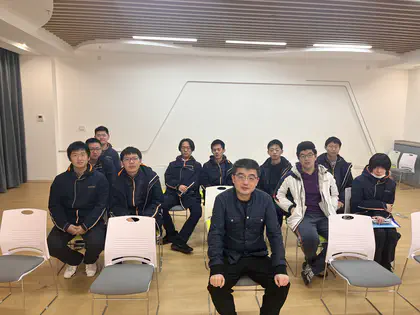
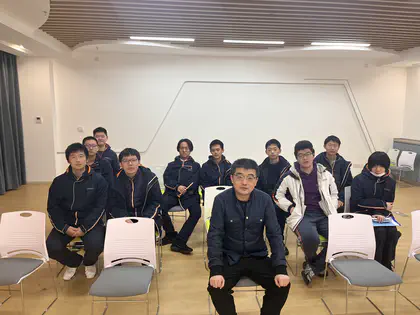
The third NFLS AI Club meeting featured an invited guest lecture on how computer vision, multimodal understanding, and large language models are deployed in real industrial …
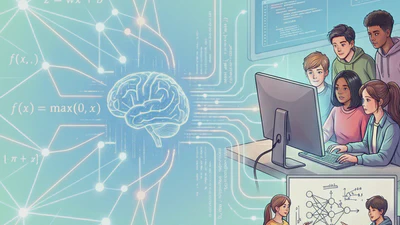
The second meeting was a 35-minute technical workshop tracing a single idea from visual intuition through rigorous mathematics to working PyTorch code: how neural networks solve …
The first formal meeting brought new and returning members together for an ice-breaking session designed to surface motivations, share curiosity, and establish the club as a real …
The NFLS AI Club officially launched at the annual school club fair, opening recruitment and introducing AI to students across the school.
Student Researcher in AI & Society
Nanjing Foreign Language School
Artificial Minds, Human Values
I’m Ruize Xia, a student researcher interested in the meeting point between artificial intelligence, ethics, and public life.
My work begins with a conviction: technical progress is not automatically human progress. Powerful systems can help people learn, communicate, and solve hard problems, but only when they are built with care for fairness, accessibility, accountability, and human dignity.
That belief shapes the work collected on this site:
The goal is not to romanticize technology or reject it. The goal is to ask better questions, design better systems, and keep human values legible even when the machines grow more capable.